Overnight post for streams where the screen is the story

Your five-hour stream is hiding thirty shorts.

Send a link to your last stream. Two days later you get twenty to thirty finished vertical Shorts — your branding, captions, sound design, titles and tags.

Send a stream → See the output First batch free. No call, no credentials.
84Clips shipped
3Streams cut
±0.04sCaption sync
48hTurnaround
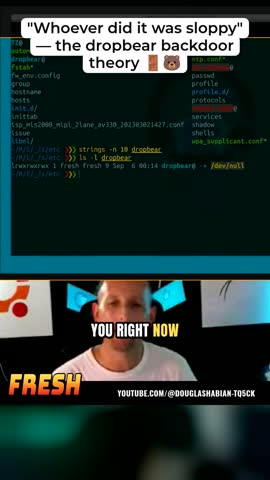
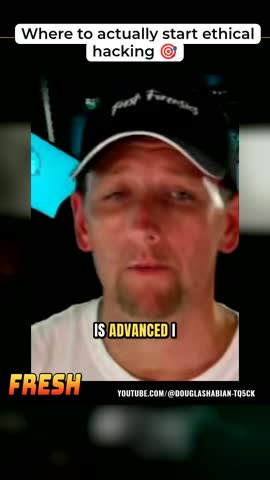
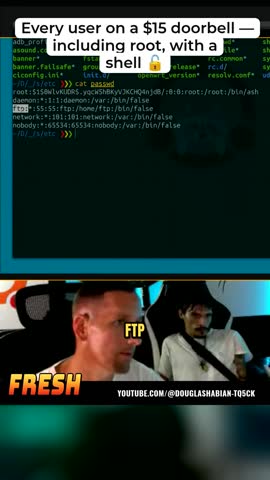
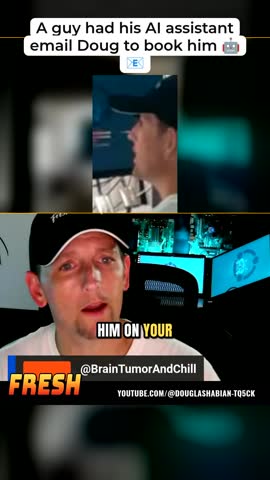
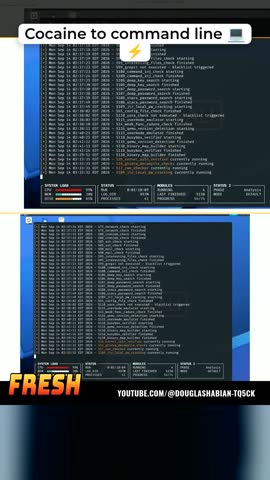
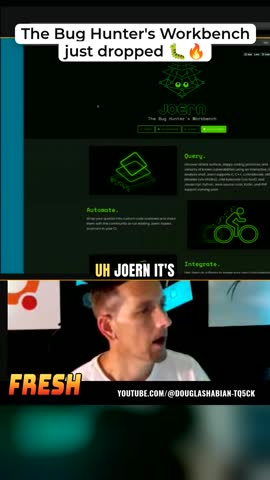
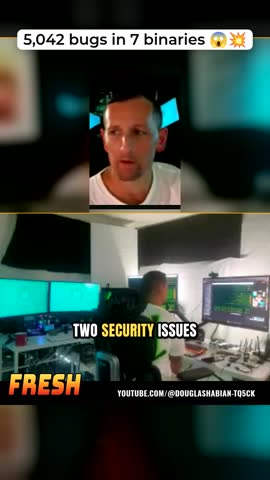
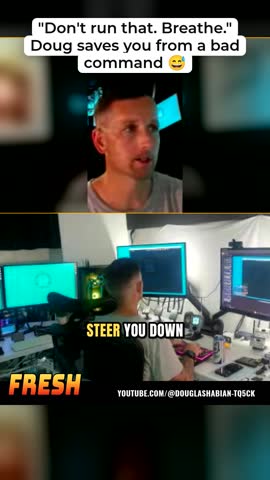
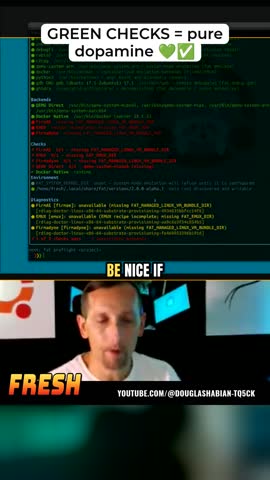
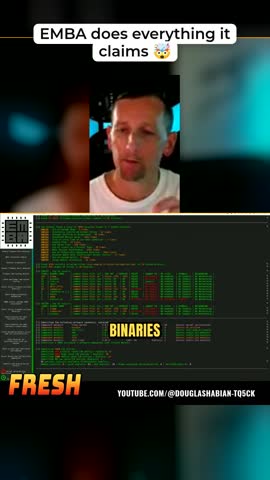
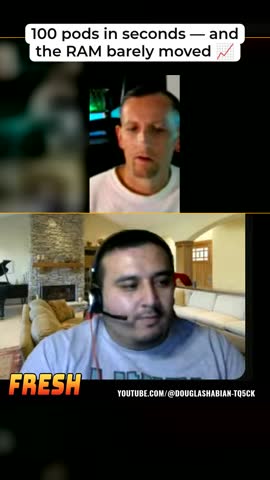
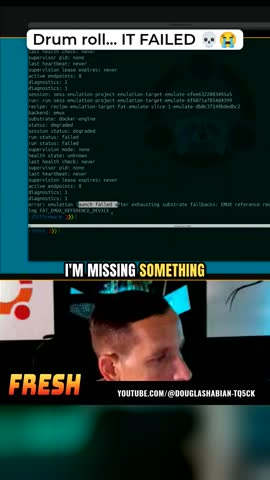
Delivered Short: dropbear backdoor investigation in a terminal. Delivered Short: a close-up of the streamer talking to camera. Delivered Short: a password file dump above two people in the room. Delivered Short: a chat message pulled into frame. Delivered Short: a full-height firmware scan log. Delivered Short: a bug-hunting tool's interface. Delivered Short: a CVE count reveal. Delivered Short: the streamer reacting above his desk setup. Delivered Short: preflight checks passing in a terminal. Delivered Short: firmware analysis output with a facecam. Delivered Short: a Kubernetes pod count on screen. Delivered Short: an emulation failure being read out.
The problem, in one second of footage

Auto-croppers throw away the thing your clip is about

Clipping tools are built for podcasts. They find a face and crop to it. Point that at a stream where the content is a terminal, an IDE, a firmware dump or a dashboard and you get a clip of nothing. Below is the same second of the same stream, cut two ways.
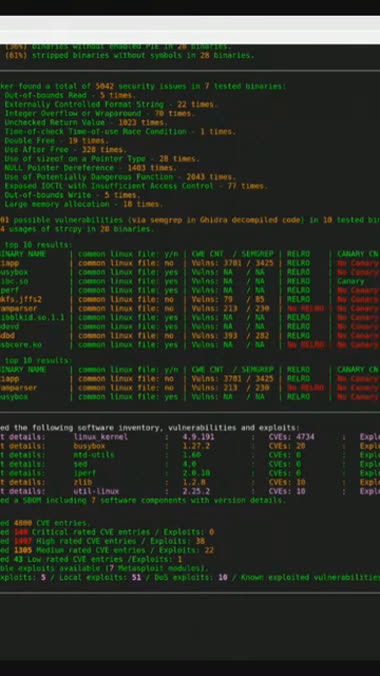
A 9:16 crop of a 16:9 stream frame: terminal text runs off both edges and the speaker is outside the frame.
Cropped to 9:16 the usual way

Every line of output cut in half at both margins. The speaker is gone. No hook, no captions, nothing telling a scrolling viewer what they are looking at.
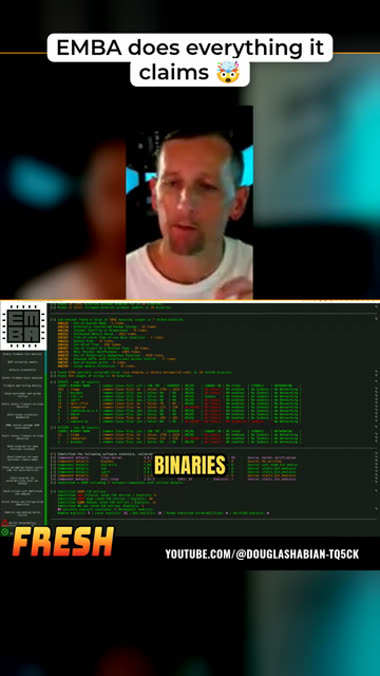
The same moment as a finished vertical Short: hook line at the top, the speaker framed on his own face, the terminal readable below, karaoke captions and a branded bar.
The same second, ours

Hook line up top. The speaker framed on his own detected face. The terminal kept whole and readable underneath. Word-by-word captions, sound design, your bar and handle.

What actually happens to your stream

Eleven stages. Machines do the measuring, people do the judging.

Layout, crops, geometry and timing are deterministic — the same stream cuts the same way every time. A language model is only allowed editorial calls, and every one of its answers is clamped by code before it reaches a render. Then a person watches the result.

01Pull the streamA public URL is all we need. No channel access, no credentials.Code
02Transcribe onceFive and a half hours, word-timestamped, in about a hundred seconds. Nothing is transcribed twice.Code
03Find the momentsReveals, strong opinions, things that broke, things that worked. Shout-outs and dead air thrown out.Model
04Cut the candidate list downRoughly thirty-five become twenty-five. Hooks get rewritten where they read generic.Human
05Locate the words in file timeKeyframe seeking lies by up to ten seconds, so the moment is found by matching speech, never by the clock.Code
06Decide the editUp to four ranges per clip. The first delivers the hook, the last lands on the strongest line.Model
07Snap every cut to real speechSentence ends first, then pauses, then clauses. Ranges that overlap are merged; dead air is dropped.Code
08Read the frameScreens and cameras separated by saturation, faces found per panel, terminals checked for readable text by OCR.Code
09Choose the layoutScreen-led, two-up, reaction or solo — picked per clip. Empty screens are never shown.Code
10Captions and sound designTechnical jargon repaired, then two to five effects placed so their impact lands on the beat.Model
11Watch every clip, then shipStart to finish, by a person. Weak clips are rebuilt or killed before you ever see them.Human
Code — deterministic, repeatable, measured Model — editorial judgement, clamped by code Human — taste, and the final no
Real output

The layout is chosen per clip, not stamped on every clip

Four untouched frames from delivered batches. Each got a different composition, because each moment had a different thing worth looking at.

Short: a full-width terminal above a strip showing the streamer's face.
Screen leads

Dense terminal output gets the panel. The face drops to a strip.

Short: a single close-up of the streamer, no screen content at all.
Nothing on screen

When the screen holds nothing, it isn't shown. One close-up instead.

Short: a terminal dumping the password file above two people in the room.
Two people

Each face framed on its own face, not on a single tracked speaker.

Short: a narrow screen strip, a large facecam, and a chat message pulled into frame.
Chat in frame

When the moment is a chat message, the chat becomes part of the clip.

Elapsed time from the moment your link lands

The forty-eight hours

00:00

Your link arrives

A public URL. No channel access, no credentials, no call.

00:20

The whole stream is transcribed

Five and a half hours of audio, word-timestamped, in under two minutes.

01:30

Thirty-five candidates, cut to twenty-five

Reveals, strong opinions, things that broke. Shout-outs, dead air and setup-without-payoff are thrown out. A person makes the final list.

04:00

Every clip rendered

Layout, crops, cuts, captions and sound. Roughly fifteen minutes of machine time for twenty-five clips.

06:00

Every clip watched

Start to finish, by a person. Anything that lands badly, runs a beat long, or shows an unreadable panel gets rebuilt or dropped. Eighteen good clips beat twenty-five with seven weak ones.

48:00

In your hands

The masters, a metadata sheet with titles, descriptions and tags, and a note naming the three to post first.

Rate card

Six to eight dollars a clip

A freelance clipper charges $20–60 per finished Short and takes a week. Everything here is month-to-month — no minimum term, cancel whenever, and the first batch costs nothing either way.

For creators
The 48-Hour Drop
Free once

One stream, 20–30 clips, two days. Yours whether or not you ever speak to us again.

One-off
$150 / stream

On demand, no commitment. For irregular streamers and one-night events.

Two a week
$400 / month

Around fifty clips a month. Roughly $8 a clip.

Five a week
$800 / month

Around a hundred and twenty-five clips a month. Roughly $6.40 a clip.

For companies, conferences and courses
Per session
$600 / session

One webinar, talk or launch stream. Invoiced, PO accepted.

Archive
$300 / session

Ten sessions or more. Back-catalogues and whole conference tracks.

Standing
$2,000 / month

Continuous coverage, named contact, priority turnaround.

The questions everyone asks

Straight answers

Isn't this just one of the auto-clip tools?

For a podcast, those are fine and cheaper — use them. For a stream where the content is on a screen, their crop throws the content away. Scroll back up to the two frames.

Why wouldn't my editor do it?

They should — for your long-form. Editors cost $40 an hour and hate clipping. This is $6–8 a clip and comes back in two days.

Who owns the clips?

You do, outright, on delivery. No licence, no ongoing fee, and no Noirpost watermark anywhere in the frame — your wordmark is the only branding in the shot.

Do you post them?

No. We never touch your channel, your login or your schedule, and we have no say in what you publish. You get files and a suggested order.

What if a clip is bad?

A person watches all of them before you see any of them, and the weak ones never ship. If one still misses, say so and it gets rebuilt.

What about music and copyright?

No music beds — a baked-in commercial track is a Content ID claim waiting to happen on your channel. Sound design only.

Start here

Send one link

  1. Email a URL to your last stream and the handle you want in the bar.
  2. You get 20–30 finished Shorts back within two days.
  3. You post them, or you don't. There is no second step.
hello@noirpost.live → Reply within one business day.